Is the CFA worth it? What the charter did for me, thirteen years later
 By Greg Campion, CFA, author of CFA Confidential · Published October 2026 · Updated October 2026
For me, yes, though mostly in the background. The charter got me into the room for my current job, has done a lot of reputation work for me over the years, and gave me the confidence to hold my own in serious investment conversations. AI doesn’t make it worthless: knowing whether an answer makes sense still takes real understanding. Whether it’s worth it for you depends on where your energy and strengths are.
Did the CFA pay off?
People ask me whether the CFA paid off. It’s hard to point to a moment where it directly changed my career.
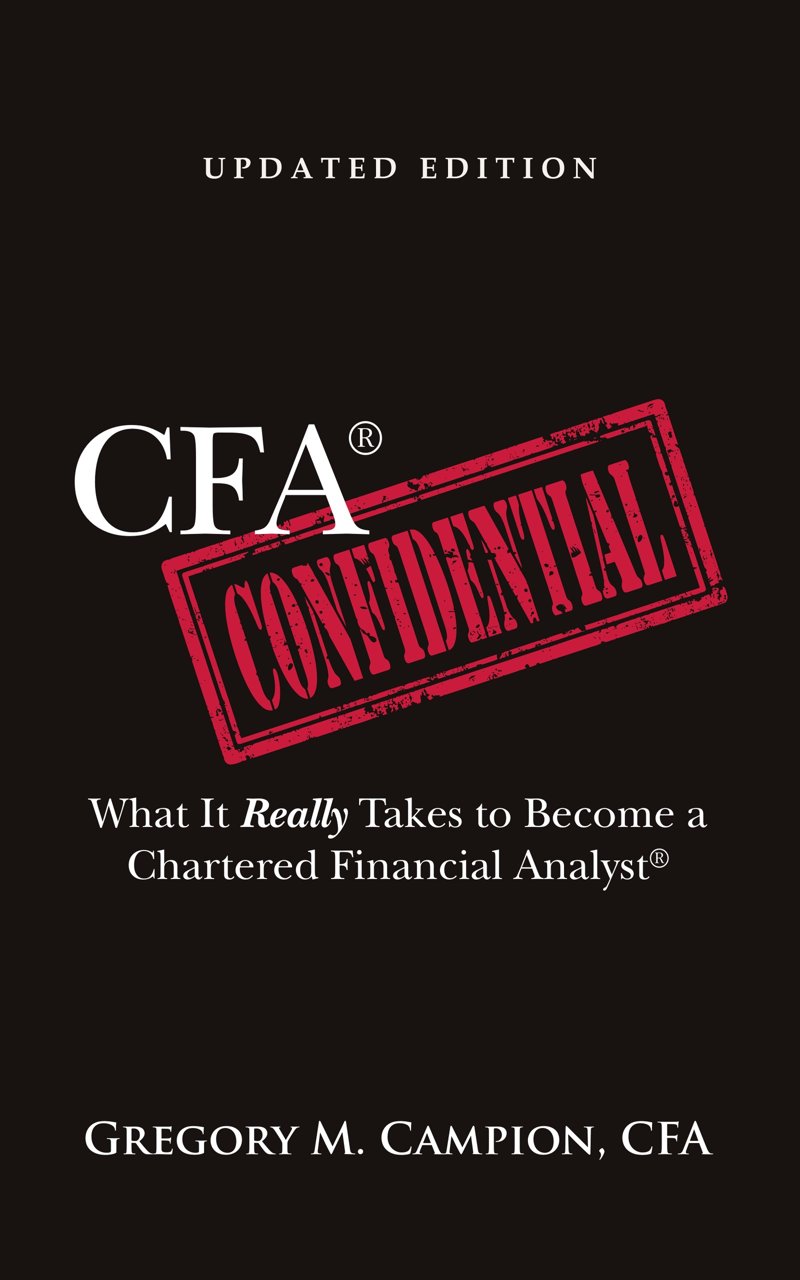
The last time I applied for a job was in 2013. The firm I joined, an asset manager, was looking for someone who knew investment markets and could write, to help reinvent how it communicated about its investments. Having the charter helped. Ironically, writing this book helped too. The CFA got me into the room, and the book about failing the CFA over and over again showed I could write. I benefited from both.
Since then, the charter has mostly done its work in the background. I have no idea how many times someone has seen “CFA” after my name and decided to reach out, or not, or made an assumption about what I know. I suspect the three letters have done a fair amount of reputation work for me.
The bigger impact may have been on how I see myself. Mastering that body of material gave me confidence that I could go toe to toe in sophisticated investment conversations. Could I have done all that without the three letters? Arguably. But I think they helped.
Should you fix your weaknesses or play to your strengths?
For me, the CFA was a weakness-fixing exercise. It’s heavily quantitative, and my natural strengths are on the qualitative side. The CFA became a really long, really hard, really expensive check mark in the category of “strengthen your weaknesses.” What I’ve done since is almost the opposite: leaned into storytelling, writing, interviewing and communicating.
That won’t be true for everyone. If the quantitative material is exactly where your strengths and interests are, the CFA may be the most natural thing in the world for you.
Would I do it again?
Today, at forty-eight with three kids? Zero chance. Zero. Some of that is age, but I think the bigger issue is energy. So that’s the question I’d ask you: where is your energy? I can absolutely picture someone who’s forty-eight with three kids and completely fired up about this. If that’s you, go for it.
Does AI make the CFA worthless?
I don’t think so. I don’t see a world anytime soon where people get to skip actually understanding things. There’s probably less value now in memorizing formulas. But memorizing formulas was never really the point. Understanding the concepts was.
If I were a candidate today, I’d work on two things at once: understanding the investment concepts deeply, and getting really, really good at AI. AI changes the tools. It doesn’t change the need to know what you’re looking at.
Frequently asked questions
Is the CFA still worth it now that AI can pass the exams?
In Greg Campion’s view, yes. AI reduces the value of memorizing formulas, but someone still has to judge whether a model or recommendation makes sense, and that takes real understanding of the concepts.
Is it too late to start the CFA in your 40s?
Not if you have the energy for it. Energy and motivation matter more than age, and plenty of candidates start later in their careers.
How does the CFA help a career outside investing roles?
Mostly through credibility. In roles like sales or marketing at an investment firm, the charter signals real investment knowledge that colleagues and clients may not otherwise assume you have.