The real story of the CFA Program, from someone who’s been there.
In 2007, Greg Campion emailed his girlfriend to say he was thinking about taking the CFA exams. She wrote back: “That’s a terrible idea.” He signed up for Level 1 that same week. Five years later, after a few more twists and turns than he’d planned, he became a CFA charterholder.
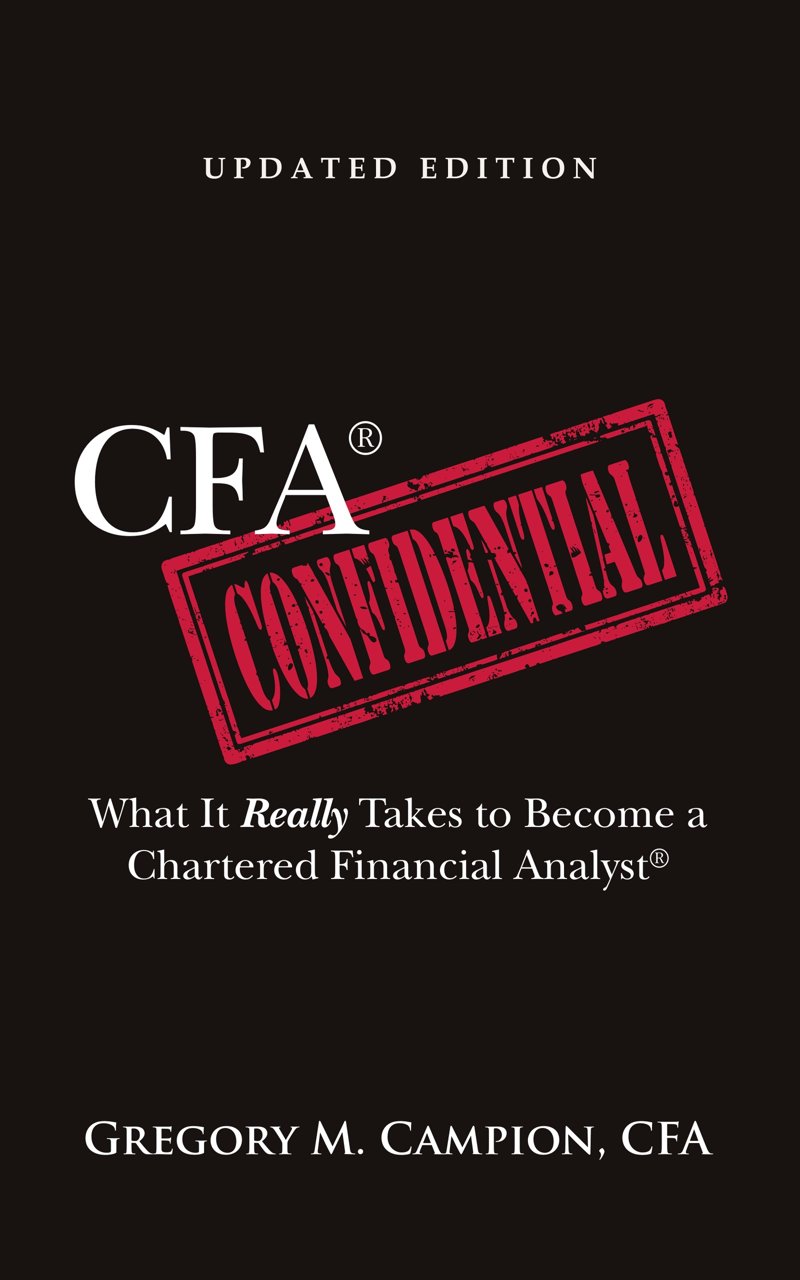
The conversation you’d want over coffee with a friend who’s been through it.
Before you sign up, and while you’re in the middle of it. It isn’t a study guide. It’s the companion to one.
- 1Whether the CFA is worth it for you, and how it compares with an MBA on cost and pay
- 2What it really takes in time, money, work and relationships
- 3How each level is different, and why practice exams matter more than anything else
- 4Exam day, sleep, and keeping your sanity
- 5What to do when you get the FAIL email, and how to decide whether to go again
New in the updated edition
Prologue
As I sat in a dimly lit hotel ballroom in Boston’s Back Bay district, I felt like I was losing control of my own thoughts. Crowded in among hundreds of other poor souls who were collectively experiencing one of the most nerve-racking days of their lives, I tried to get my bearings. The afternoon session of the exam would begin in ten minutes. The mood was tense. Chitchat was minimal. The man to my left sat so still with his eyes closed that if it weren’t for the occasional deep breath, I could have sworn he had expired right then and there, a victim of CFA stress. The woman to my right was also void of any outward emotion—she sat stiffly with a military-like posture staring straight ahead. Her perfectly aligned pens, pencils, erasers, and calculator gave the impression that she’d done this a thousand times before—and intimidated the hell out of me.
It was 2011 and I had been on the hunt for my CFA charter for four long years. This was exam day, the culmination of all my hard work and sacrifice. It was the third and final level. The morning session had been rough, but I knew that the material on the afternoon session was my strength and I expected to do well. Failure was not an option. I’d already failed this level once. If I failed this time around, I figured, it wasn’t meant to be. How embarrassing it would be to fail it again. I sure as hell couldn’t stomach another six months of studying. I couldn’t fail. I wouldn’t fail.
The minutes ticked by ever so slowly. The instructions were read over the loudspeaker. Bubble in your name and your candidate number. Rip out the answer sheet along the perforated line. Everything was going according to plan when a careless mistake sent me into a panicked spiral—I had just torn out an extra page of my answer booklet. I panicked. I looked around for help. “This is not a big deal,” I tried to convince myself. But it was. A proctor arrived at my desk and took my exam book. “We’ll get you another one,” she said.
And then the exam started. But I had no book. One minute. Two minutes. Three minutes. Nothing. Finally, five minutes into the exam, my test book arrived.
But it was too late. Panic had taken over. I tried to read the opening passages of the Ethics material, but I just couldn’t concentrate. I was breathing fast, and my heart was beating out of control. This Ethics section suddenly seemed impossible.
Ethics was normally a part of the exam that I considered a strength, and I counted on a strong performance here so I could “bank” extra minutes to use later. But I was so flustered at this point that I could hardly read the questions. What I did read seemed to make no sense at all. To top it off, the stress was taking over and I was experiencing severe chest pains. A perfectly healthy thirty-three-year-old man should not be experiencing chest pains. Was I having a heart attack? At least, I thought grimly, dropping dead on the spot would save me from the shame of failing once again.
Questions every candidate asks

Greg Campion, CFA
Greg is a Managing Director and Head of Content at Barings, and host of the podcast Streaming Income. Before that he spent 12 years in institutional sales at Lehman Brothers and Barclays. He’s also the author of Say Good Morning, Like a Human and lives in Charlotte, North Carolina, with his wife and three kids.
More at gregcampion.com